Which party, board, manager or document gives someone the power to act?
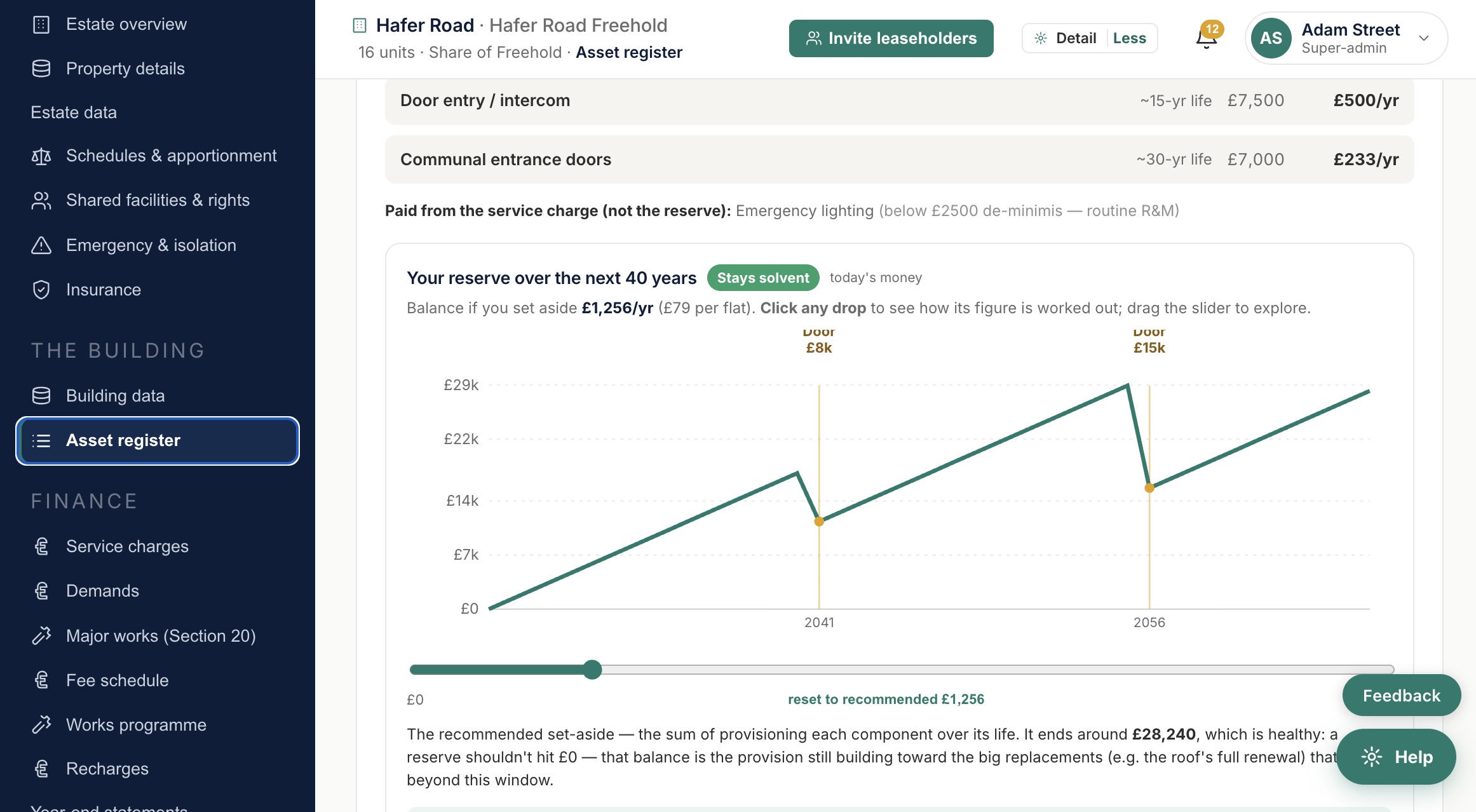
Real co-creation prototypeHafer Road asset register
Components, planned costs and reserve provision across 40 years.
BLOCK-iQ is being co-created
The lease answers one question. The building keeps moving.
BLOCK-iQ is the wider layer around the lease: responsibilities, records, decisions, money and the physical building. It is in co-creation and is not yet available as a public product.
The operating problem
A building decision rarely lives in one document.
The repair may begin with the lease, depend on a survey, affect the insurance claim, change the budget and need a board decision that someone can explain two years later.
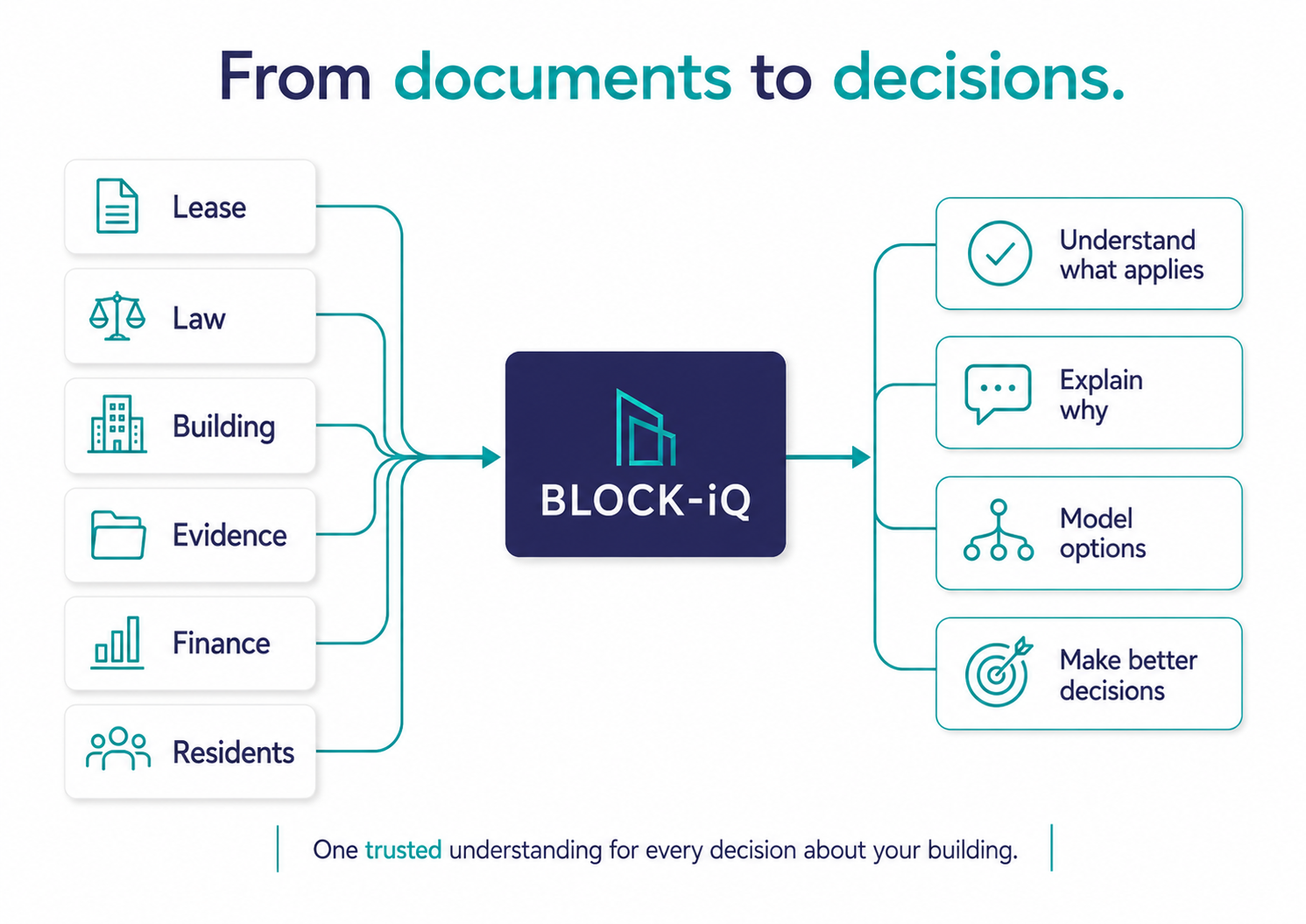
BLOCK-iQ is being shaped around that connected record. The aim is not another compliance dashboard. It is a clearer route from the live decision to the documents, facts, people and history behind it.
The old way and the co-creation model
The record is scattered. The decision still has to be made.
BLOCK-iQ is being shaped to connect the building evidence around a live decision without pretending every estate follows one template.
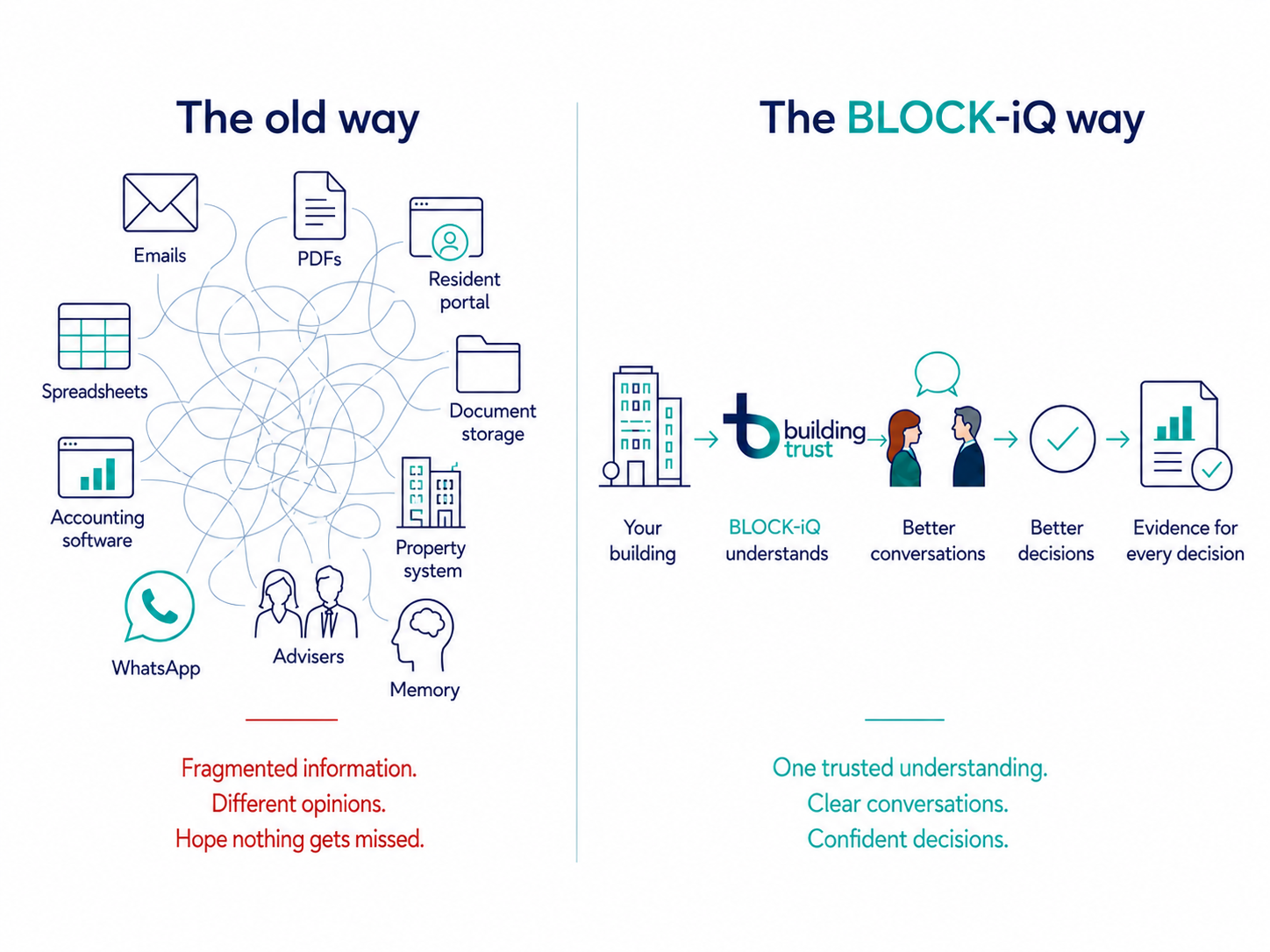
This is the BLOCK-iQ co-creation model, not a claim that the finished estate platform is available today.
Why one template is not enough
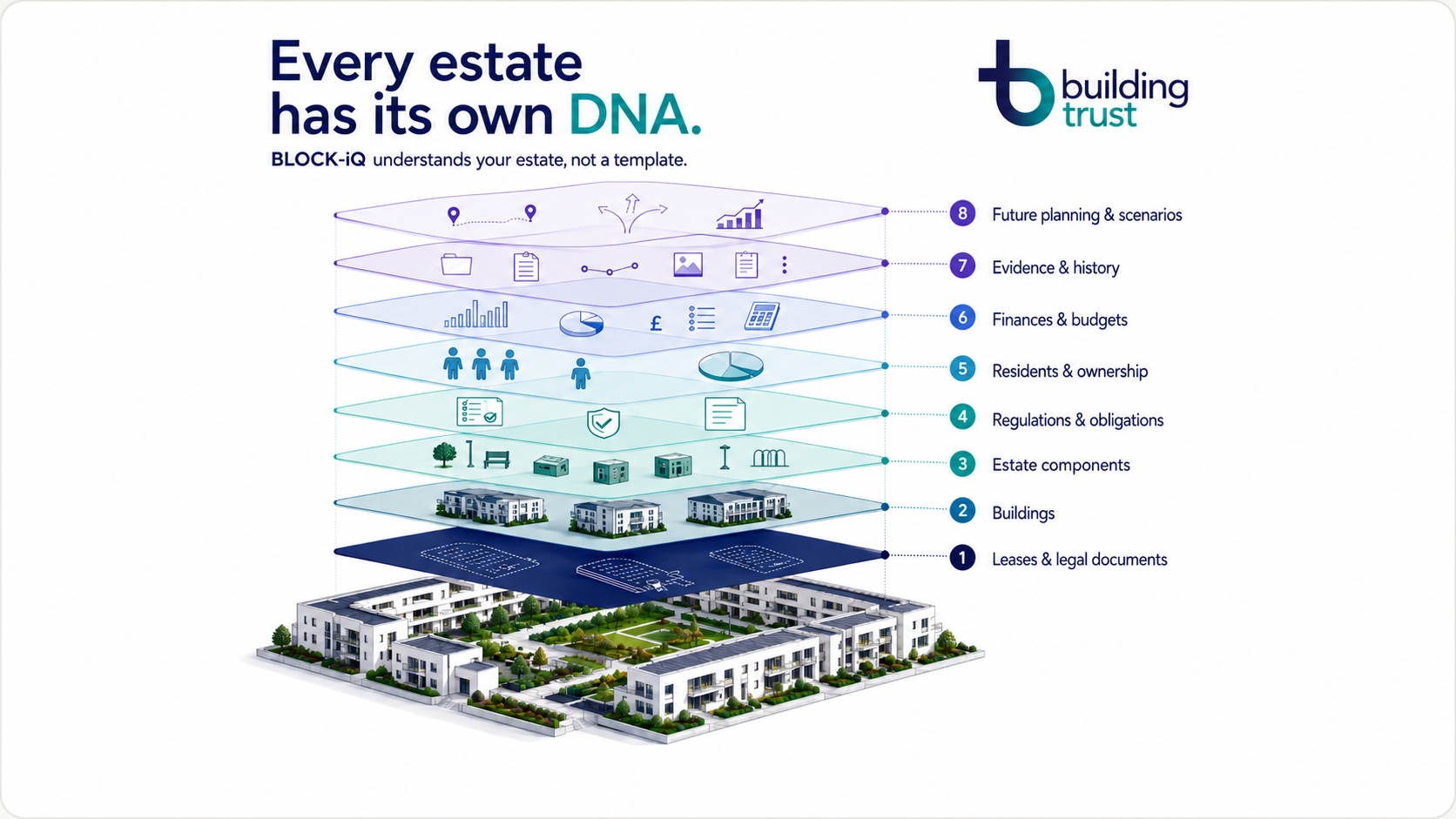
Every estate has its own DNA.
The useful view depends on the leases, buildings, ownership, records, people and decisions around that estate.
Why LEASE-iQ is the core
BLOCK-iQ needs a trusted lease spine before the wider process can move.
The lease decides who can act, who pays and which evidence matters. That source layer has to be visible before the wider workflow can be safely shaped around it.
Live nowLEASE-iQ
→Signed documents, current sources and a human-verifiable answer route.
Shared foundationLease spine
→Rights, responsibilities, parties, payments and the source behind each point.
In co-creationBLOCK-iQ
The wider building record, workflow, evidence and decision history.
Four questions behind the argument
Who decides, who pays, what happened and where is the proof?
Which interest or party carries the repair, service, consent or payment obligation?
What can be charged, to whom, on what basis and against which budget or account?
Which report, decision, notice or event explains how the current position was reached?
How co-creation starts
Start with the decision already causing work.
Bring one live building question. We connect the lease, building evidence, people, money and history it actually depends on, then test which repeatable steps are worth building.
- 01 · DecisionChoose the live decision
Use a question the board, manager or property team must settle now. Name the accountable person and the consequence of delay.
- 02 · EvidenceConnect the estate DNA
Map the leases, interests, building components, obligations, people, money and history that the decision actually depends on.
- 03 · WorkflowAutomate the repeatable route
Build only the steps that can preserve the source, decision owner, open uncertainty and handover record.
Where BLOCK-iQ is now
Bring a case into co-creation.
LEASE-iQ is live and provides the signed-document and source-verification starting point.
The wider estate record, relationships, decision history and useful views are being shaped through real building cases.
BLOCK-iQ is not currently offered as a public compliance system, safety verdict or finished estate-management platform.
Start with what is already difficult
Bring one building decision.
Show us the decision, the documents behind it and where the current process breaks down. That is enough to test whether the wider BLOCK-iQ layer is useful.
Register interest in BLOCK-iQSend the decision and the records involved. Do not attach building records to the first email.What must the board, agent or property team decide?
Which documents, facts and people does it depend on?
What would make the next decision easier to make and explain?