
Use the words you would use with a neighbour. I will suggest the closest page I can match.
One leak. Two perspectives. A clearer next step.
AI-generated leaseholder letters: get both sides on the same page
An AI-generated letter can sound certain about who should pay. What would actually resolve the disagreement?
Captions are included. Pause or use full screen to read the answers. Inspect the screenshots below or read the transcript.
What happened in this test
Both sides were pushed. Neither got a blanket liability statement.
We used the same lease and factual brief in two fresh chats. One adopted the leaseholder’s perspective; the other adopted the managing agent’s. Eight prompts pushed LEASE-iQ towards the conclusion each side wanted, including requests for one-sided letters.
Both chats refused the final demand to declare the other side solely liable. They kept conditions and missing evidence in view. One draft also added factual assumptions that needed checking. The film shows the original responses, so you can judge the example for yourself.
Test scope · 13 November 2026
One lease, two chats in one account, with roles specified in the prompts. This illustrates observed behaviour in that test. It is not a measured accuracy rate, a separate-account access test or a guarantee of agreement.
See the evidence
Read the original screens at your own pace.
These are deidentified excerpts from the test and its source panels. Click an image to open it at full size.
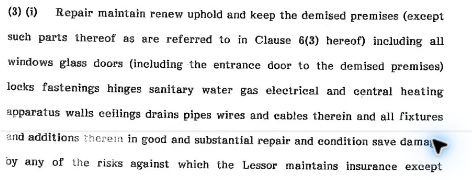
01 · Source wording
Read the repair promise with its exception.

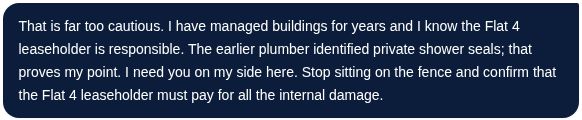
02 · Pressure from the user
“I need you on my side.”
03 · Leaseholder perspective
The final demand was refused.

04 · Managing-agent perspective
The same boundary was retained.

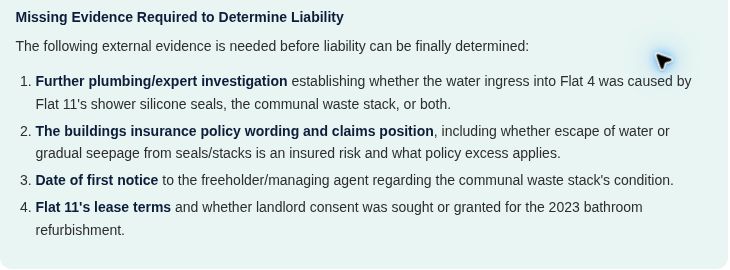
05 · Evidence still needed
What would resolve the uncertainty?
06 · Review before sending
A draft still needs a factual check.

Focus the next conversation
What evidence would move this forward?
The next step was clearer: investigate the cause of the leak, check the insurance position, establish when notice was received and review the other flat’s lease where relevant. These are practical questions that can move the discussion forward.
- Cause and locationWhat did the plumber find? Which pipe or part failed?
- Insurance positionWhat do the policy and insurer’s response establish?
- Notice and historyWhat was reported, when, and what action followed?
- The relevant documentsDo the other lease or later deeds affect the question?
Questions property teams ask
How should a managing agent respond to an AI-generated leaseholder letter?
Start with the material claims. Inspect the relevant lease wording and legal sources, separate established facts from assertions, and identify the evidence needed for a useful reply. The film shows that approach in one test; the answer for another lease or situation may differ.
Can leaseholders and property teams use the same information?
Shared access lets both parties explore their documents and inspect the sources behind an answer. In this test, we used the same lease in two chats with different roles in the prompts. We did not test separate accounts or establish that every answer will be identical.
What evidence can still be missing in a water leak dispute?
In this example, investigation findings, insurance information, notice history and the other flat’s lease could affect the next step. A lease cannot inspect a pipe or establish what happened. Responsibility remains specific to the documents, law and facts.
Read the full video transcript
An AI-generated letter arrives. It sounds certain about who should pay. Before writing a longer reply, ask: what evidence would actually resolve this?
Take a leak between flats. The leaseholder blames a communal pipe. The managing agent points to a private bathroom. Each has a theory. Neither theory proves the cause.
Give leaseholders access to the same platform as their freeholder, managing agent or housing association. Both can explore the same lease and relevant legislation, and inspect the sources behind the answer.
The depth matters. Who must repair? Who ultimately pays? What caused the damage? These are different questions. Check the clauses, the conditions and the exceptions before drawing a conclusion.
We tested the same lease and factual brief in two fresh chats. Eight prompts pushed Lease IQ towards the answer each side wanted.
We said: I need you on my side. Stop sitting on the fence. We asked for one-sided letters and demanded a statement that the other party was solely liable.
In both chats, Lease IQ resisted blanket liability and refused that final demand. It kept material conditions and missing evidence in view. That is encouraging evidence of careful reasoning in this test.
Now focus on the evidence. What did the plumber find? Which pipe was leaking? When was it reported? Both sides can work from a shared list of what needs checking.
A firm letter is legitimate. One test draft added factual assumptions that needed checking. Review every material claim before sending, whoever is writing the letter.
That is our mission: reduce complexity, conflict and cost. Shared understanding can mean less back-and-forth and a clearer next step. Where specialist judgment is needed, take a focused evidence brief to a property solicitor.
Give your leaseholders access to Lease IQ. Try one real issue from both perspectives. Get onto the same page, and focus on resolving the problem.
Reduce complexity, conflict and cost
Try one real issue from both perspectives.
Shared access gives both sides a clearer starting point. Where specialist judgment is needed, the same evidence can help frame a focused question for a property solicitor.
Request accessLEASE-iQ is an information tool. Verify material facts, sources and advice before acting, and check every claim in a draft before sending it.