
AI-written leasehold challenges
Answer the source, not the confidence of the draft.
Respond to AI-written lease complaints by checking the cited lease, evidence and decision required before accepting or rejecting the argument.
View the supporting illustration
Triage the message
First decide what has actually arrived.
Request, allegation or formal step?
Separate an information request, complaint, letter before action and tribunal document. The response owner and deadline may be different.
Reduce the draft to the live propositions
List each factual assertion, lease interpretation, statutory citation, amount and remedy sought. Do not answer a long generated narrative as one undivided claim.
Identify who can decide
Check whether the board, landlord, managing agent, insurer, contractor or adviser owns the decision. An agent may coordinate the reply without holding the underlying authority.
Protect the real timetable
Record contractual, complaints, pre-action and tribunal dates separately. A prompt response does not replace the correct procedural step.
Build the response
Make every conclusion traceable.
Quote the complete lease route
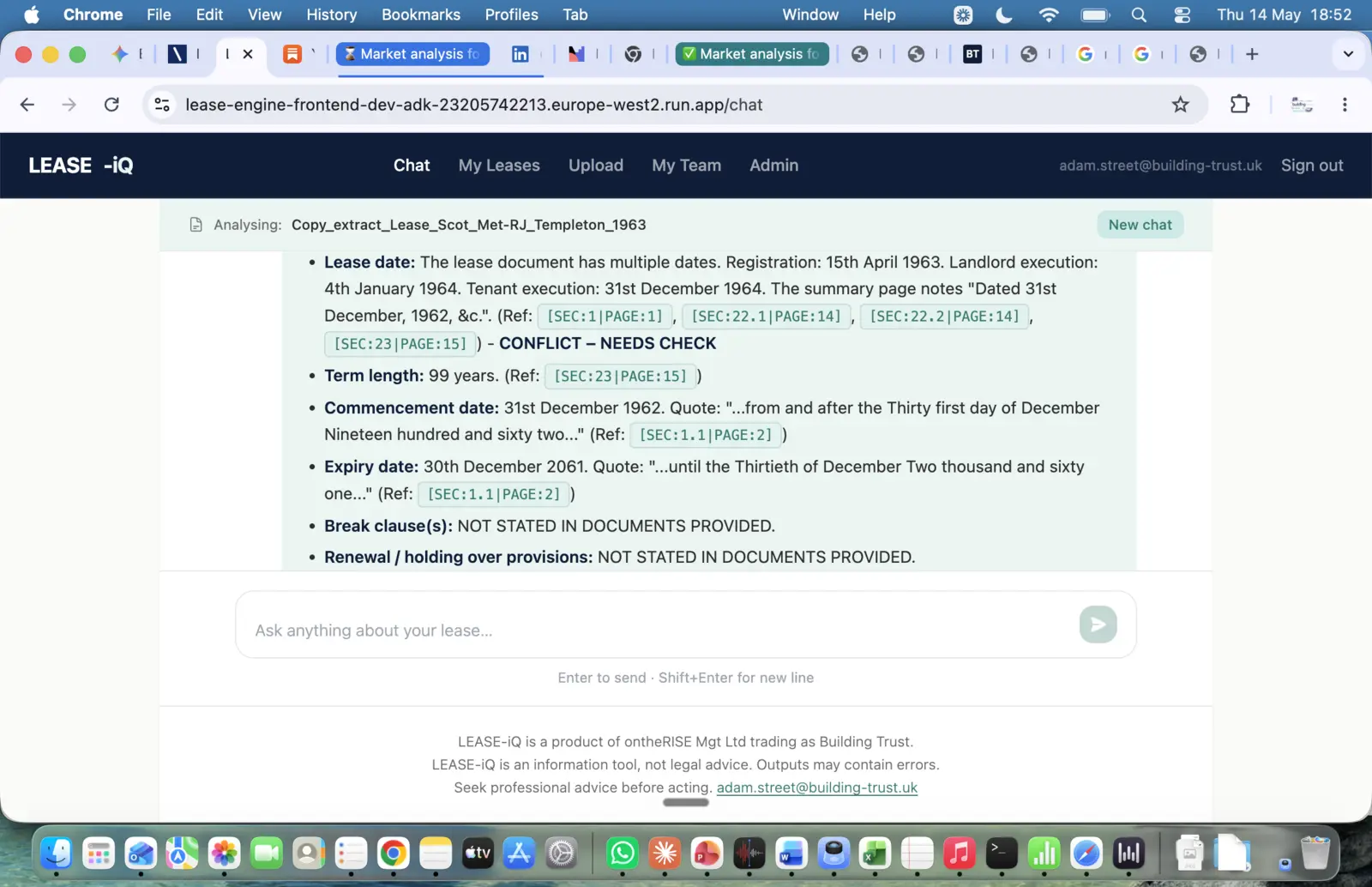
Use the relevant definition, clause, schedule, plan and later deed. A sentence extracted by either side may change meaning when the linked provisions are read together.
Separate fact from interpretation
State what the records establish, what the document says, which legal rule is relied on and what remains disputed. Link invoices, minutes, reports and correspondence to the point they support.
Open the current official source
Check legislation and current guidance directly. Confirm jurisdiction, commencement and whether the cited provision applies to this building and date.
Approve the decision, not just the wording
Record who reviewed the substance, who had authority to decide and what evidence was unavailable. A well-written response is not a substitute for a properly made decision.
Use AI safely
A drafting tool does not inherit the board's duties.
Keep personal and confidential material controlled
Do not upload leases, complaints, bank details or resident information to an unapproved service. Apply the organisation's privacy, retention and access controls.
Check every citation and quotation
Open the source and compare the complete wording. Treat invented cases, missing sections and confident summaries as foreseeable review risks.
Keep the accountable human visible
The file should show the evidence, advice, conflicts, decision-maker and final response. Do not present an AI output as independent authority.
Sources for this page
Check the law and official guidance.
How building trust separates the governing document, current source, evidence and open point.
→Independent guidanceLEASE dispute-resolution guidanceCurrent independent routes for resolving residential leasehold disputes.
↗Regulator guidanceICO guidance on AI and data protectionThe UK regulator's guidance for controllers using AI with personal data.
↗Prepared by Adam Street, founder of building trust. Links and current-law position checked 18 August 2026. Apply the governing documents, building facts and current law to the case in front of you.
Take the next step in LEASE-iQ
Check the documents behind the answer.
Use this when the issue is unclear or several clauses may interact.
Copy questions for this issue
Keep checking: A well-structured question makes uncertainty easier to see. It does not turn incomplete sources into certainty.