Watch the question become a draft
MULTI-LEASE WALKTHROUGH · 2:09
Read the video transcript
A managing agent or housing association needs a policy people can follow. With fifty leases in a block, checking every document can become a major job. LEASE-iQ does the analysis and drafting, helping the team move from dealing with problems to preventing them.
This development example starts with eight leases. We asked what each says about cooking fat, food waste and wet wipes in drains. LEASE-iQ returned a separate answer for every lease.
All eight detailed answers identified a refuse restriction, although the short labels varied. The work brings the terms into one view, so differences and qualifications can inform the policy instead of being lost in a blanket rule.
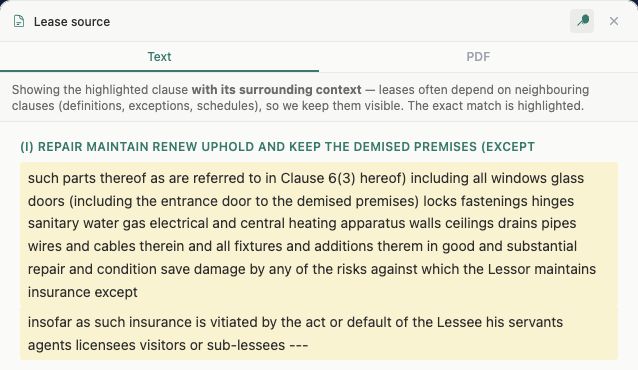
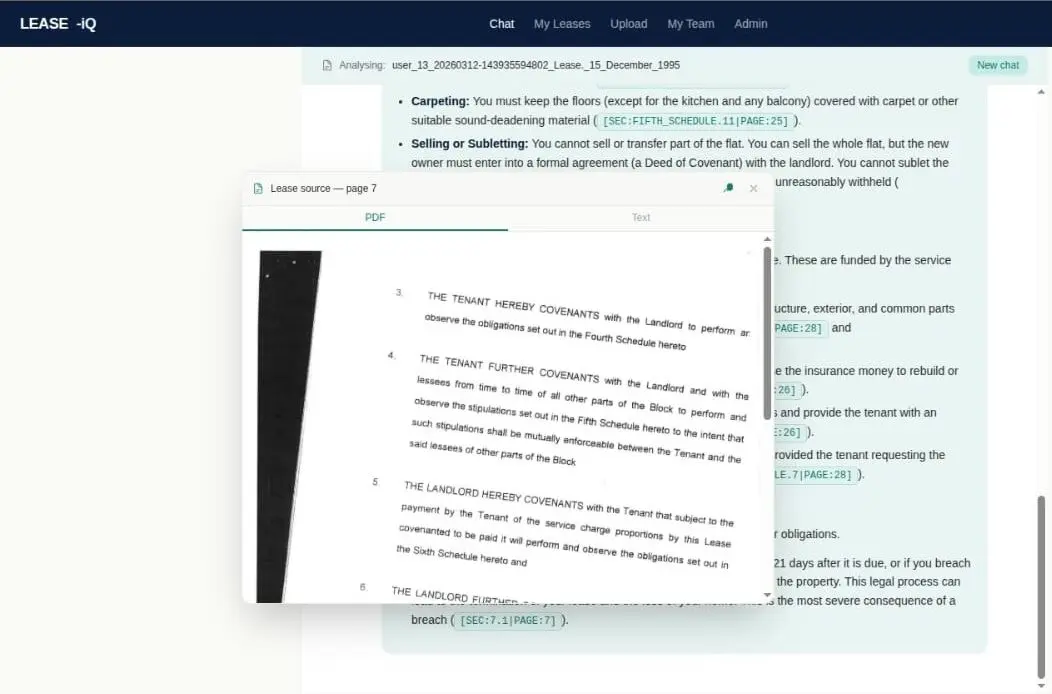
The sources stay available. Here is clause fifteen. We checked the refuse wording in two leases. This demonstrates a way to work through a building's documents; it is not a completed legal check of all eight.
We then asked about recovering blockage costs. LEASE-iQ identified potential lease provisions and relevant legislation. Any individual charge still needs the right basis and evidence of responsibility. A new policy cannot create a power the lease or law does not provide.
Next, LEASE-iQ wrote the building notice and a separate evidence table from one selected lease. The output explains practical action, lease obligations and conditions on cost recovery. Here is the complete edited communication, with identifying details removed.
The message explains why shared drains matter, what to keep out of them, and what people should report. The team has wording it can use, with the contact details to add and the applicable leases to confirm.
It also explains that there is no automatic fine. The supporting evidence stays separate from the message. Download the editable example below the film. This is the communication produced, not just a list of things somebody else must write.
LEASE-iQ does the document work and drafting. People can focus any review on uncertainty and the decisions that matter. Build confidence through repeated use. The goal is clearer policies, fewer avoidable problems, less conflict and lower costs. Savings still need to be measured.
See the question, findings and checks
The starting point was a residential building with two reported blockages in three years. The cause of those incidents was not established. The aim was to help residents prevent the next one.
Does this lease prohibit the leaseholder or occupiers from putting cooking fat, food waste or wet wipes into drains in a way that causes a blockage?
We put this question to eight distinct leases. All eight detailed answers identified a restriction on putting refuse into sinks and waste pipes. We opened the cited source in two leases and checked the wording. The short answer labels varied, so the detailed answers and sources mattered.
A second question across the same leases examined individual cost recovery. The answers identified potentially relevant indemnity and costs provisions. That does not establish who caused a blockage or automatically entitle the landlord to charge a particular flat.
Read the edited example building notice
Please help keep our drains clear
Dear residents,
Please put wet wipes, nappies and sanitary products in the bin, including wipes labelled “flushable”. Keep food scraps out of the sink. Let cooking oil and fat cool, collect them in a suitable container and follow local disposal guidance.
The leases checked for this example restrict putting refuse into sinks, lavatories and waste pipes. Please share this guidance with everyone in your household and any tenants or visitors.
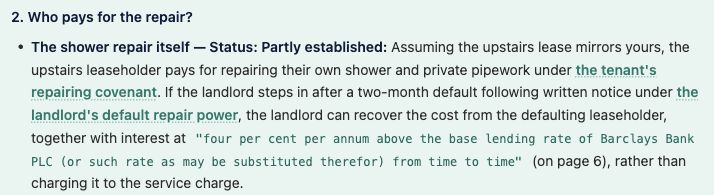
Blockages can disrupt several homes and lead to avoidable costs. Where the lease allows communal drainage costs to be recovered, these may form part of the service charge. Any proposed charge to an individual leaseholder would require an appropriate lease basis and supporting evidence, with applicable statutory protections observed. This notice does not introduce a fixed penalty.
Please report slow drainage, backflow or a blockage promptly to [managing agent and contact details].
Thank you for helping protect the building.
Reviewer’s reference: the sampled leases’ refuse restriction is numbered 15. A sampled indemnity provision is headed “16. INDEMNITY”. Check the exact schedule, page, wording and all affected leases before issuing a property-specific version. The notice above is an edited illustration, not a notice already issued to residents.
What should the managing agent check?
- Record each lease, relevant clause, PDF page, short quotation and any difference. Do not turn a sample check into an “all leases compliant” claim.
- Separate household guidance from enforceable obligations. A new policy cannot itself create a lease right to charge.
- For an individual recharge, check the contractual route, evidence of responsibility, actual reasonable costs and the required demand process. Finding a blockage’s location does not by itself identify its cause.
- For a shared bill, apply the lease’s apportionment. An equal split is only appropriate where the lease provides for it.
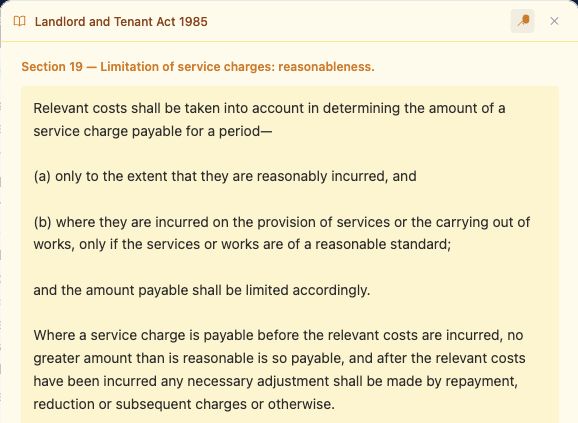
Legal references: Landlord and Tenant Act 1985, section 19 limits relevant service-charge costs by reasonableness. Commonhold and Leasehold Reform Act 2002, Schedule 11 provides safeguards for administration charges, including certain breach-related charges. These provisions do not themselves create a right to recover every blockage bill.