
The leasehold map
Different disputes. The same three layers underneath.
Start with the governing document, follow the relevant statutory or tribunal route, then identify the evidence and decision still needed.
View the supporting illustration
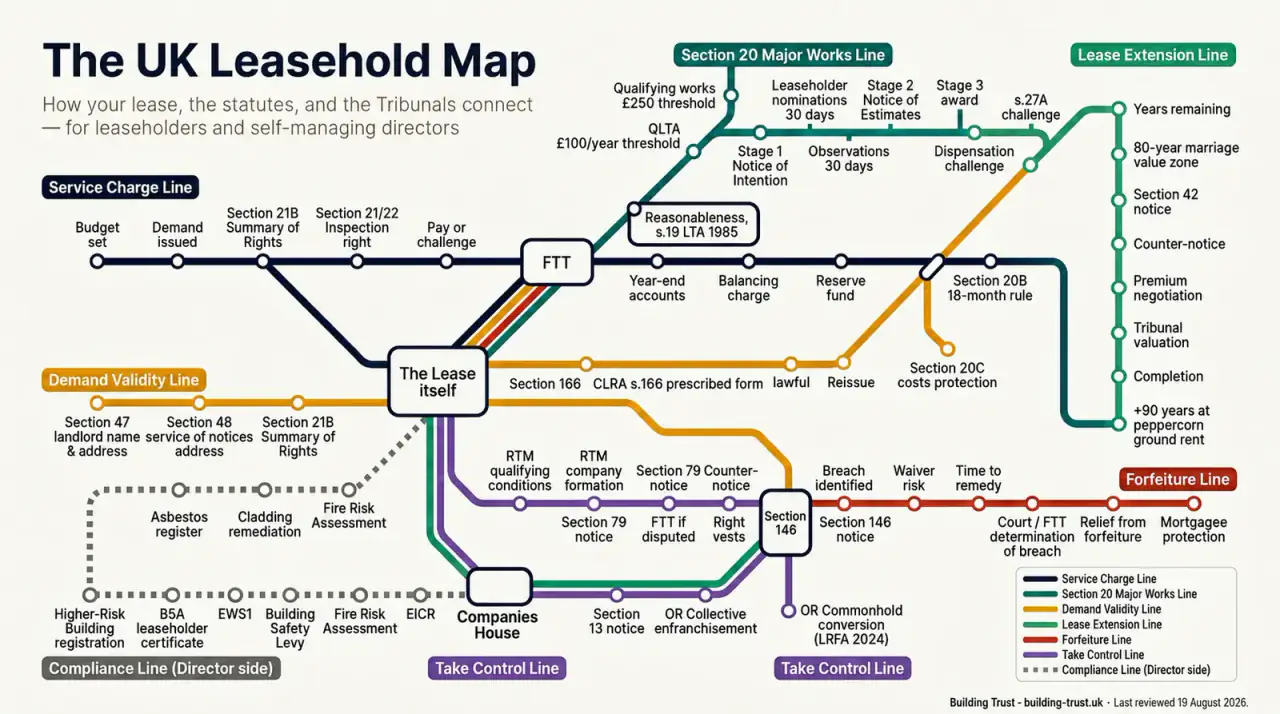
State the question to resolve
Six routes through a shared building.
The repair nobody agrees who pays for
Trace the failed part, the repair In plain EnglishA binding promise in the lease to do something, pay something or not do something.Open the plain-English glossary, the policy and the evidence of cause.
Open repairs →The service-charge answer nobody can explain
Separate lease authority, the amount, the demand paperwork and the evidence behind the cost.
Open service charges →The project that may need consultation
Classify the arrangement, calculate the relevant contribution and identify the correct consultation route.
Open major works →The consent request going round again
Find the covenant, the decision-maker, the conditions and any other document that affects the request.
Open consent →The transaction waiting for the right documents
Confirm the title, lease term, assignment conditions, building records and route in force today.
Open buying →The board decision with no reliable handover
Connect the company powers, leases, money, appointments, building evidence and action record.
Open board control →The common method
Do not let one layer pretend to be another.
The governing document
Use the executed lease, deed, title, articles, policy or contract that applies to the right party and interest.
The current source
Check the applicable statute, regulation, judgment or official guidance with its date and scope visible.
The live evidence
Keep reports, correspondence, invoices, dates and contested facts separate from what the document establishes.
The decision
State who decides, what remains uncertain, what action follows and when professional judgment is genuinely required.
Sources for this page
Check the law and official guidance.
Free independent guidance on leasehold rights, charges, repairs, management and disputes.
↗Official sourceUK legislationOpen the current and historical text of UK legislation before relying on a general summary.
↗Prepared by Adam Street, founder of building trust. Links and current-law position checked 19 August 2026. Apply the governing documents, building facts and current law to the case in front of you.