Managing agent · 2:11 film
A leak report. Access refused.
See the actual scanned lease and relevant legislation. Check the repair and entry conditions, then prepare a calm inspection request while cause and responsibility remain unconfirmed.
Explore the question and the next step
Start with the question
Who may enter to investigate this reported leak, for what purpose and on what conditions? Show the relevant wording and what remains unknown.
Prepare something useful
Draft a neutral inspection request. Cause and responsibility are unconfirmed. Do not invent an appointment, deadline or right of entry.
Consider how it might be received
Could the occupier reasonably ask about scope, attendees, disruption or cost? Review these as possible concerns, not predictions.
Worked example using the real scanned Hafer Road lease and a hypothetical situation. Actual product screens are distinguished from illustrative next steps.
Worked example using the real scanned Hafer Road lease and a hypothetical situation. Actual product screens are distinguished from illustrative next steps.
Download this filmRead the transcript
A leak is reported. The resident is worried, access is disputed, and the cause is unclear. LEASE-iQ helps you work through the lease, understand your next step and write a response. You can do that in the same conversation.
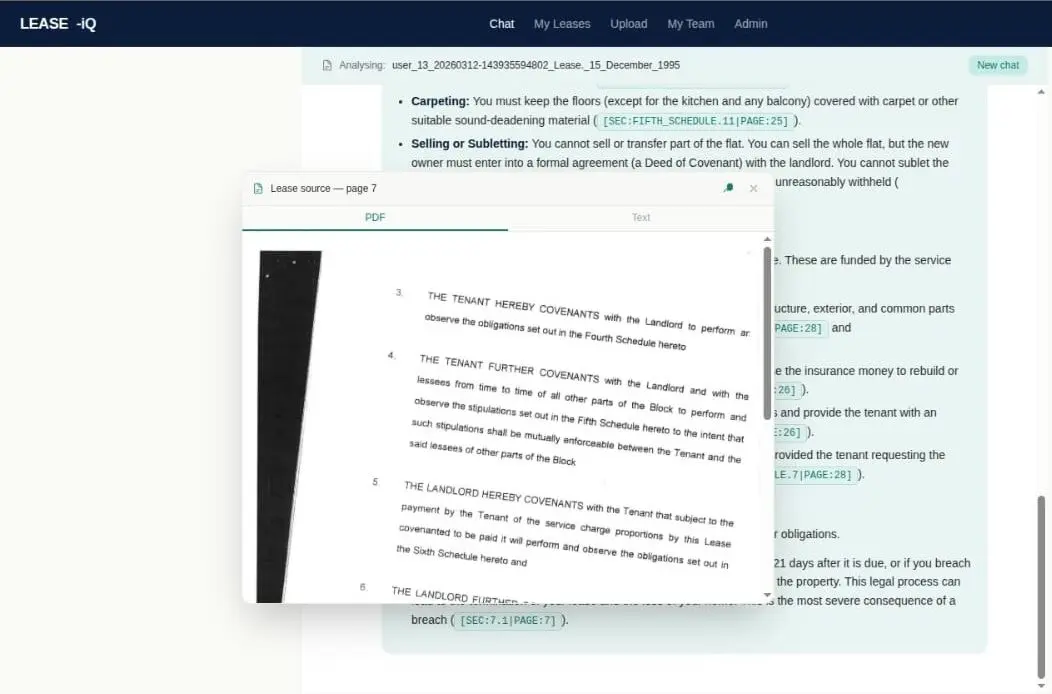
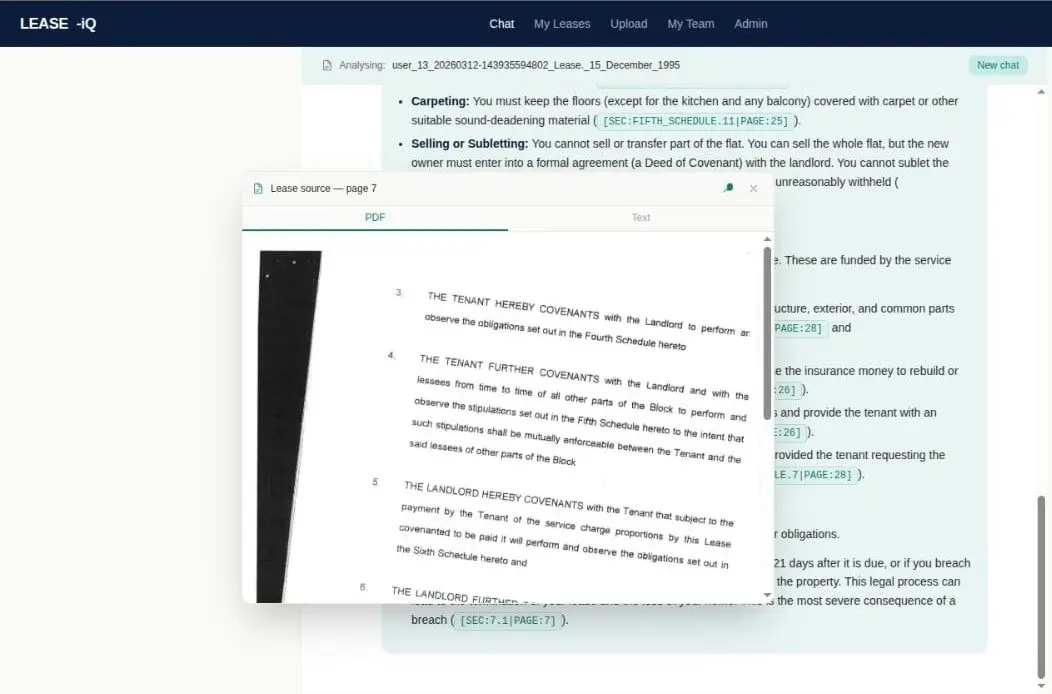
Start with the source. This is the actual scanned lease page, not just an extracted answer. The property description includes all Service Media exclusively serving the Property. For a pipe, the question is whether it serves only this flat. That needs evidence; the lease cannot inspect the pipe.
Here is the original repair page. Read the obligation to keep the Property in good repair and condition together with the insurance exception in the same sentence. Check the definitions and the cause of the damage. Do not transfer this answer to another flat without checking its own lease.
Keep the legislation in view too. This is section nineteen of the Landlord and Tenant Act nineteen eighty-five, opened in the source panel. If repair costs are to be recovered through a variable service charge, check reasonable spending and a reasonable standard of work, as well as the lease's charging provisions. This does not decide who caused the leak.
Next, ask about the entry conditions: who may enter, for what purpose, the notice, timing and making good any damage. LEASE-iQ connects the wording and explains it. Open the source yourself to verify it against the facts of your case.
Now ask LEASE-iQ to draft a calm inspection request. It can also read the draft from the resident’s perspective. Does it explain who is coming, what will happen in their home, and whether agreeing to an inspection means accepting a bill? Refine the wording in the same conversation, then check that it says what you intend before sending.
Trust and verify. LEASE-iQ is built around accuracy, with connected lease wording, relevant legislation and sources you can inspect. No AI or lawyer can promise a hundred per cent accuracy. For a repair bill or disputed liability, open the lease and legislation to personally validate the answer. You have the explanation and the response ready to use. If you want specialist advice on a complex dispute, LEASE-iQ can prepare the brief too.
Read the scanned pages and legislation
Open the original pages at a readable size, then compare the wording with the explanation.
- Scanned lease: what the Property includes (printed page 15)
- Scanned lease: repair promise and insurance exception (printed page 24)
- Section 19 as opened in LEASE-iQ
- Check Section 19 on legislation.gov.uk
This is a worked example using one lease. Personally verify the document, law and facts that matter to your decision.