Leaseholders
Your Rights Service Charges Service Charge Calculator Service Charge Health Check Lease Extension Enfranchisement Commonhold Buying a Leasehold Flat Pets & Renters Rights Check Your Building
Directors
Compliance Obligations Compliance Audit BLOCK-iQ Calculator BLOCK-iQ Portal
Products
LEASE-iQ BLOCK-iQ Pricing FAQ About Case Study Try LEASE-iQ free →
Last updated: 8 April 2026
Case study · Original research

5 years. £576,022 recovered. Zero solicitors.

How one self-managed building fought a defective roof insurance claim from first leak to final settlement. And why it should never have taken this long.

5
Years from first leak report to final settlement
£576K
Recovered from insurer. No solicitors. No legal fees.
2,600
Hours logged by the lead director. Unpaid.

How this building came to exist

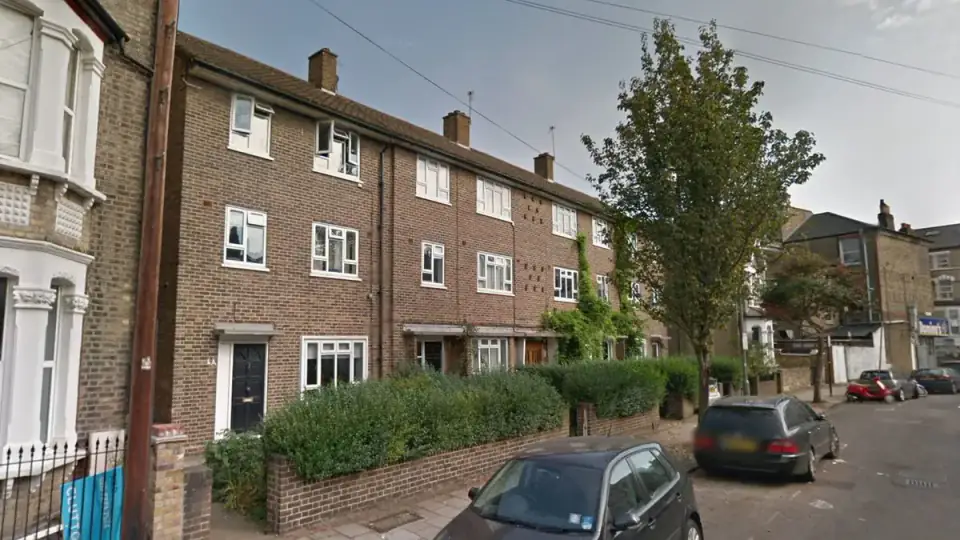
In 1954The original Hafer Road block was built in the 1950s by Wandsworth Council to replace Victorian terraces destroyed in the Blitz. Source: project development records and Community Led Housing London, Wandsworth Council built two blocks of flats on Hafer Road to replace Victorian terraces destroyed in the Blitz. Eight council flats. 6,000 square feetOriginal block: 8 flats, total 6,000 sq ft. New building: 16 homes, 16,350 sq ft. Source: Evening Standard Homes & Property, 8 February 2017. of post-war housing.

By 2010, seven of those flat owners had bought their leases under Right to Buy. They knew each other. Some had grown up in the building. They agreed to buy the freehold from the council.

Wandsworth Council sold the freehold in September 2011 for £38,000Freehold purchased 26 September 2011. The council attached a £25,000 price to the roof, recognising its development potential. Source: Hafer Road Ltd development brief, 2012.. The council attached a £25,000 premium to the roof because they knew it had development potential. The residents knew that too.

What followed was one of London's most unusual residential developments. The seven freeholders demolished their own building and rebuilt it. They added eight new flats on top, sold them to fund the project, and moved back in with homes twice the size. 16 homes. 16,350 square feet.Source: Evening Standard Homes & Property, 8 February 2017. Every flat bespoke. Every resident a shareholder.

Designed by Peter Barber Architects and completed in March 2016Building completed March 2016. Design and build by Kuropatwa Ltd. Architect: Mark Fairhurst (detailed design) with Peter Barber Architects. Source: Cookson's Consultancy Site Investigation Report, 11 October 2023., the building won the RIBA MacEwen AwardRIBA Journal: Hafer Road, MacEwen Award for architecture that serves the community. It was the front page of the Evening StandardHomes & Property supplement, Evening Standard, 8 February 2017. Read the article in February 2017.

Total development cost: roughly £6 millionCost of development covering planning, finance, and build. Source: Evening Standard Homes & Property, 8 February 2017.. Current estimated value: around £14 millionApproximate total block value. Source: RIBA Case Study submission, 2017.. Self-managed from day one. No managing agent. No property company. Just directors with day jobs.

None of that prepared us for what happened next.

What went wrong with the roof

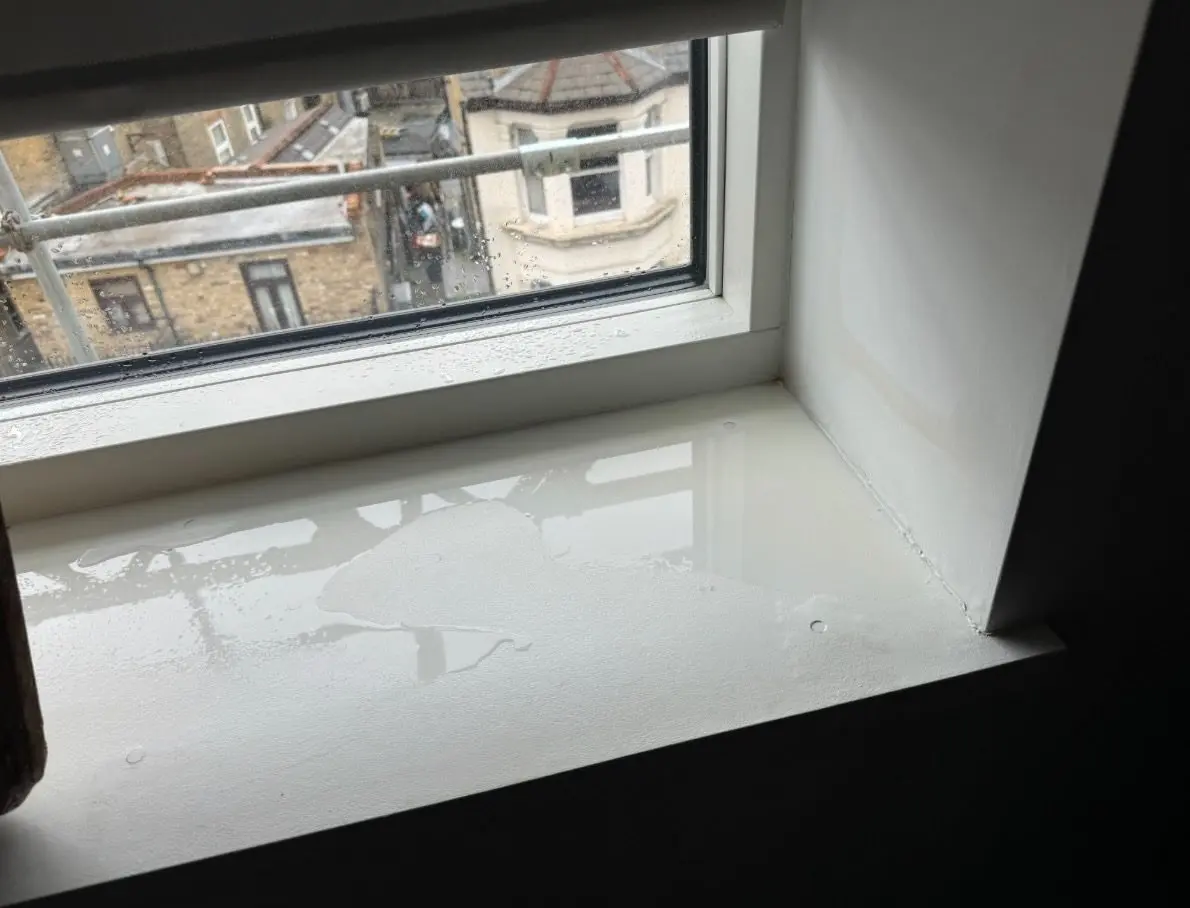
In 2019, three years after completion, water started coming in. Staining above windows. Pooling on sills. The kind of damage that gets worse the longer you wait.

We reported it to our structural warranty insurerNew-build residential blocks typically have a 10-year structural warranty (e.g. NHBC, Premier Guarantee, or specialist providers). If the warranty provider goes bust, cover can lapse without the freeholder being notified. Directors should check warranty status annually. FSCS. Three claims were paid over the next two years: parapet works in 2019, brickwork and soffit repairs in 2021, and basement tanking. Each was treated as a separate issue. Each was a red herring. The leaks kept coming.

In November 2022, we lodged a fourth claim. This one was different. It was effectively a continuation of the first two claims, which had never actually resolved the underlying problem. The insurer denied it in 2023, citing a condensation and humidity exclusion clauseInsurers can invoke exclusion clauses (e.g. humidity, condensation, prior alterations) to deny claims. Under the Insurance Act 2015, exclusions must be applied fairly and transparently. If an exclusion is used incorrectly to deny a legitimate claim, policyholders can challenge through the Financial Ombudsman Service. Insurance Act 2015 and claiming there was no vapour control layer in the roof.

In September 2023, we commissioned an independent roofing surveySite Investigation Report by Cookson's Consultancy Ltd, an independent roofing consultant. Survey date: 26 September 2023. Report date: 11 October 2023. Cookson's is not attached to any roofing contractor or material manufacturer. from Cookson's Consultancy, a specialist roofing consultant with no ties to any contractor or manufacturer. What they found was worse than anyone expected.

The findings

The GRP waterproofing system had not been installed to industry standards. The survey identified four separate coating defectsDefects identified: (1) surface cracking, (2) delamination of coating, (3) severe cracking and delamination, (4) inconsistent film thickness and pinholing. Source: Cookson's Consultancy Site Investigation Report, Section 4.3.: surface cracking, delamination, severe cracking, and inconsistent film thickness. Two additional parapet defectsParapet defects: (1) gaps in parapet capping, (2) unsealed fixings. Source: Cookson's Consultancy Site Investigation Report, Section 4.4. were found on top of that.

But the critical failure was invisible. The original design specified an Air and Vapour Control Layer (AVCL)Under BS 5250:2021, an AVCL should be positioned immediately above the supporting structure to mitigate interstitial condensation risk. It should be wrapped around insulation edges and sealed to the waterproof finish. Source: Cookson's Consultancy Site Investigation Report, Section 3.2.. Cookson's could not find one. Neither could the insurer. Both concluded it was missing. It turned out the VCL was there all along, buried beneath a screed layer that had set hard as concrete. Nobody found it because nobody expected to look under it. But the missing VCL was ultimately a red herring. The roof had failed across multiple systems. VCL or no VCL, the insurer was using the exclusion clause to avoid a payout. The OSB substrate beneath the waterproofing had been soaking up water for years.

When Cookson's cut a core sample at the highest point of the roof, the OSB was saturated at 99% moisture contentCore sample moisture readings: OSB at 99% WME (saturated), insulation mid-point at 27% WME, screed level at 41% WME. OSB had swollen from its original 19mm thickness to approximately 25mm. Source: Cookson's Consultancy Site Investigation Report, Section 4.2.. It had swollen from 19mm to 25mm. Moisture readings at the insulation mid-point were 27%. At the screed level, 41%. The entire roof structure was wet.

Everyone said the VCL was missing. The insurer. The independent surveyor. It turned out the VCL was under the screed, which had set like concrete. But it did not matter. The roof had failed across its entire waterproofing system. VCL or no VCL, this was not condensation. It was a construction defect.

Five years of claim

Here is what the timeline actually looked like.

2019
First leaks reported. Water ingress into flats and staining on the external face. The building is three years old. First insurance claim submitted for parapet works. Paid. A red herring.
2021
Second claim submitted for brickwork and soffit repairs. Also paid. Also a red herring. A third claim for basement tanking was also settled. None resolved the underlying problem. The leaks continued.
November 2022
Fourth claim lodged. This was the real one. Effectively a continuation of the first two claims, which had never resolved the root cause. The building is still leaking.
2023
Claim denied. The insurer relied on a condensation and humidity exclusion clauseInsurers can invoke exclusion clauses (e.g. humidity, condensation, prior alterations) to deny claims. Under the Insurance Act 2015, exclusions must be applied fairly and transparently. ICOBS 6.1.5R requires insurers to provide clear, timely, and comprehensible policy information including exclusions. If an exclusion is used incorrectly to deny a legitimate claim, policyholders can challenge through the Financial Ombudsman Service. Insurance Act 2015, claiming there was no vapour control layer in the roof.
September 2023
Independent roofing surveyA critical distinction: the insurer's loss adjuster works for the insurer. They appoint experts (like surveyors) on the insurer's behalf. An independent survey commissioned by the policyholder provides an unbiased technical assessment. In our case, the insurer-appointed surveyor's report contained material inaccuracies. The independent survey contradicted it on every key finding. Directors should always consider commissioning their own expert report. commissioned. Cookson's Consultancy confirms installation defects across the entire waterproofing system. Like the insurer, they also concluded the VCL was missing. It was later discovered beneath a screed layer that had set like concrete.
January 2024
KC opinionA KC (King's Counsel) or senior barrister can provide a formal legal opinion on whether an insurer's reliance on policy exclusions is legally defensible. In our case, the KC opinion demolished the insurer's reliance on their exclusion clause. The subsequent discovery that the VCL had been there all along, hidden under screed, confirmed it. Cost: significant, but it changed the insurer's stance within weeks. obtained on the strength of the claim. The KC opinion, combined with the later discovery that the VCL had been there all along, demolished the insurer's reliance on their exclusion clause.
March 2024
Face-to-face meeting with the insurer. Armed with the independent survey, the KC opinion, and the evidence that their basis for denial was factually wrong.
June 2024
Settlement agreed: £576,022.75. Five years after the first leak. No solicitors. Every document drafted by the directors.
August 2024
Section 20Section 20 of the Landlord and Tenant Act 1985 requires freeholders to formally consult leaseholders before qualifying works exceeding £250 per leaseholder. Get the sequencing or the wording wrong and the costs become unrecoverable. Legislation consultation commenced for the roof replacement works.
January 2025
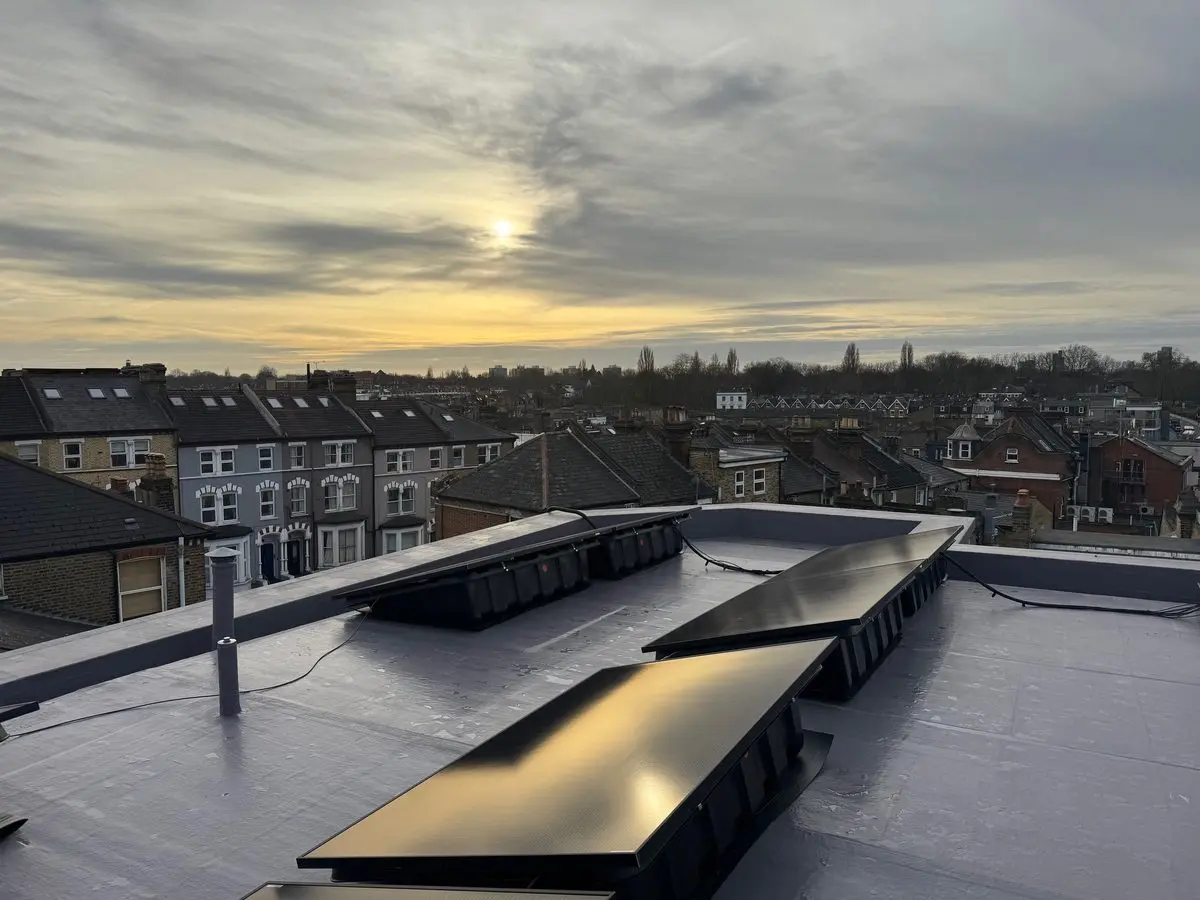
Roof replacement completed. New waterproofing system with solar panels installed.
A separate complaint to the Financial Ombudsman ServiceThe Financial Ombudsman Service (FOS) is a free, independent service for resolving disputes between consumers and financial firms including insurers. The current maximum award is £430,000 for complaints about acts or omissions on or after 1 April 2024. Financial Ombudsman Service regarding the insurer's conduct throughout this claim is still ongoing. To be continued.

How AI changed the repair itself

When it came time to actually fix the roof, we did something unusual. We used generative AI throughout the repair project.

AI acted as an independent third party to verify variations to the original spec. When the contractor proposed a change, we ran it through AI analysis before agreeing. When the roofing consultant recommended a material substitution, we verified the technical basis independently. Every variation was checked. Every cost implication modelled.

The result: the project delivered more scope than originally specified, came in under budget, and completed with zero commercial disputes between the freeholder, the contractor, and the roofing consultant.

We also taught the contractor and the roofing consultant to use GenAI during the project. Both adopted it for their own workflows. The tool that helped us fight for five years also helped us build better when we finally could.

Zero commercial disputes on a £576K remediation project. AI did not replace the professionals. It gave everyone a shared, verifiable basis for decision-making. That is the difference.

What 2,600 hours actually looks like

I logged my time because I wanted to understand what this was really costing. Not in pounds. In life.

The 2,600 hours included insurer correspondence, loss adjuster meetings, commissioning and reviewing the independent survey, contractor tender management, Section 20 consultation notices, leaseholder communications, board meetings, site visits, a barrister's opinion, and the administrative overhead of keeping 16 households informed while fighting an insurer who was in no hurry.

On top of the unpaid director hours, the building incurred close to £100,000 in claim management costsTotal claim management costs across the full claim period including external consultants, independent surveys, KC opinion, site visits, insurer correspondence, and project coordination. Source: Hafer Road Freehold Ltd accounts.. Independent surveys, KC opinion, site visits, insurer correspondence, project coordination. Real money, paid from a service charge reserve that was never designed to fund a five-year fight.

I am also a leaseholder in this building. I hold three leaseholds. I am the lead director, the managing agent, and a resident. When the roof leaks, it leaks on my family too.

Most directors of self-managed buildings are unpaid volunteers. They carry personal liability for the building's statutory obligations. When something goes wrong, there is nobody else to call.

The dispute that changed everything

During the roof saga, a separate dispute emerged. Two leaseholders lost their structural warranty cover entirely when their insurer went bankrupt. Not lapsed. Bankrupt. No insurance at all. When the repair bill arrived, one paid their share. The other instructed a solicitor and fought it.

A £26,000 dispute. We used ChatGPT to interpret the lease. We thought we had a fairly sophisticated approach. We got the lease wrong. Their solicitor caught the error. It turned out to be a relatively minor point, not terminal. But we were very lucky.

The gap between getting it right and getting it catastrophically wrong came down to whether someone could read the lease properly. Not a general understanding. The specific clauses, the specific obligations, the specific wording that determines who pays.

That £26,000 dispute is why LEASE-iQ exists. Not the £576K. The moment we used ChatGPT to interpret a lease, thought we were being sophisticated, and got it wrong.

What this means for other buildings

Hafer Road is 16 units. A small block. The legal obligations that sit on its directors are identical to those on a block of 200. Section 20The consultation requirements under Section 20 apply equally regardless of block size. A 4-unit building must follow the same process as a 200-unit estate. Legislation consultation requirements are the same. Companies House filingAll freehold companies must file annual confirmation statements and accounts with Companies House. Directors face personal fines for late filing. Companies Act 2006 deadlines are the same. Fire safety obligations are the same. Insurance requirements are the same.

The difference is resources. A block of 200 can afford a managing agent at £300 per unit. A block of 16 often cannot. The directors do it themselves, on evenings and weekends, with no training and no support infrastructure.

This should not require 2,600 hours. It should not require a KC opinion. It should not require luck.

What we learned that every director should know

Your insurer's expert works for them, not you

When you submit a claim, the insurer appoints a loss adjusterA loss adjuster is appointed and paid by the insurer. They instruct surveyors and experts on the insurer's behalf. Their role is to validate the claim and recommend a settlement. But their incentive structure means they are not independent. Under ICOBS 8.1.1R, insurers must handle claims promptly, fairly, and transparently, but the policyholder has no control over who the insurer appoints or how they interpret the findings. who in turn appoints surveyors and experts. Those experts report to the insurer. If their report is flawed, the insurer may rely on it anyway. In our case, the insurer-appointed surveyor's report contained material inaccuracies that were only exposed when we commissioned our own independent expert.

If your claim is denied or stalled, commission your own survey. It is the single most important thing you can do.

Know your ICOBS rights

The Insurance: Conduct of Business Sourcebook (ICOBS)ICOBS is the FCA's regulatory framework governing how insurers treat customers. Key rules for building insurance claims: ICOBS 8.1.1R requires prompt, fair, and transparent claims handling. ICOBS 2.2.2R requires clear and not misleading communication. ICOBS 2.5.1R prohibits pressure tactics, threats, or intimidation. ICOBS 6.1.5R requires clear disclosure of policy terms and exclusions. FCA Handbook: ICOBS sets out how insurers must treat you. Most directors have never heard of it. It requires prompt and fair claims handling, clear communication, honest disclosure of policy terms, and no pressure tactics. If your insurer is dragging their feet, withholding reports, or threatening litigation, they may be in breach of ICOBS. Document everything.

Exclusion clauses are not the final word

Insurers can invoke exclusion clausesCommon exclusion clauses in building insurance include: humidity/condensation, gradual deterioration, poor workmanship, and prior alterations. Under the Insurance Act 2015, insurers must apply exclusions fairly. A KC legal opinion can challenge whether an exclusion is being applied correctly. In our case, the insurer cited a humidity exclusion claiming there was no VCL. Everyone agreed it was missing. Then it turned out the VCL was under the screed all along. But the VCL was a red herring. The roof had failed across multiple systems. The exclusion clause was being used to avoid a payout. The KC opinion demolished it. Insurance Act 2015 such as humidity, condensation, or prior alterations to deny a claim. But an exclusion must be properly applied. If independent expert evidence contradicts the basis for the exclusion, the insurer's position may collapse. In our case, the exclusion was a red herring. The KC opinion proved it.

The notification date matters enormously

When you first notify the insurer of a potential claim, record the date and keep the evidence. Under ICOBS 8.1.1RICOBS 8.1.1R: "An insurer must handle claims promptly and fairly; and provide reasonable guidance to help a policyholder make a claim and appropriate information on its progress." This includes commissioning adequate and immediate investigations into notified defects. Failure to act promptly can constitute a regulatory breach. FCA Handbook, the insurer must act promptly once notified. If they delay for months or years, that delay itself may constitute a breach. Every week of delay while your building is still leaking is additional damage that would not have occurred had the insurer acted on time.

You can complain to the Financial Ombudsman

If your insurer mishandles a claim, you can take the complaint to the Financial Ombudsman ServiceThe Financial Ombudsman Service (FOS) is a free, independent service for resolving disputes between consumers and financial firms including insurers. The current maximum award is £430,000 for complaints about acts or omissions on or after 1 April 2024. The FOS can consider whether an insurer breached ICOBS rules. Financial Ombudsman Service. It is free. It is independent. And the maximum award is currently £430,000. Most policyholders do not know this route exists. Most insurers would prefer you did not.

What we built because of this

The £26,000 lease dispute taught us that getting the lease right is everything. That is where LEASE-iQ came from. It reads your actual lease and gives you clause-cited answers in plain English. Every answer verified through a multi-agent consensus process. If a clause is genuinely ambiguous, it tells you instead of guessing.

The Section 20 process, the contractor management, the consultant coordination. All of that taught us something else. When you give AI the right context, it is remarkably powerful. That is where BLOCK-iQ came from. It tracks the 21 statutory compliance obligations that sit on every freehold company's directors. Deadlines, documents, RAG status. One place.

And then I started talking to friends. Other directors. Other leaseholders. People in my network who had been through their own versions of this. The same problems. The same isolation. The same sense that nobody had built anything to help them.

These experiences are not unique. That is why Building Trust exists.

About the author. Adam Street is Lead Director of Hafer Road Freehold Ltd, founder of Building Trust, and a practising SoF director who still manages the building described in this case study. He led the £6 million community-led redevelopment that created the building, and then spent five years recovering £576,022 from a defective roof claim. He holds three leaseholds in the block. He can be reached at adam.street@building-trust.uk.

Your lease has the answers. You just need a way to read it.

Upload your lease, ask any question, get a clause-cited answer in 60 seconds. First two questions free.

Try LEASE-iQ free →