Guides
Freeholder or leaseholder dispute I'm thinking of buying I'm a director — what am I liable for? I own the freehold of a converted house I want to take control of our building The leasehold map All 60+ guides
LEASE-iQ
LEASE-iQ overview Sign up (free)For commercial leases →
Talk to us
We use LEASE-iQ to do the work for you
More
Pricing About Try LEASE-iQ free →
Last updated: 26 April 2026
For directors · Fire & safety

EICR for your block. Cost, suppliers, and a draft email you can send today.

An Electrical Installation Condition Report for the communal electrics. Every five years. Boring but compulsory. Your insurer checks before paying any fire claim. This page walks you from quote to certificate.

Statutory duty
Required under the Electricity at Work Regulations 1989. The duty holder (freeholder, RTM, or RMC controlling the communal electrical installations) must maintain them in a safe condition. Failure is a criminal offence. Separately, buildings insurers can refuse to pay fire claims where the EICR is missing, expired, or has unaddressed C1 or C2 codes. In context: But the fix is bounded: typical EICR £350-£800, half a day on site, every 5 years. The compliance work itself is small; remediation costs depend on what is found.
What this means Your situation Price Suppliers Draft email Funding FAQ
What this actually means

A half-day inspection. Every five years. A certificate on file.

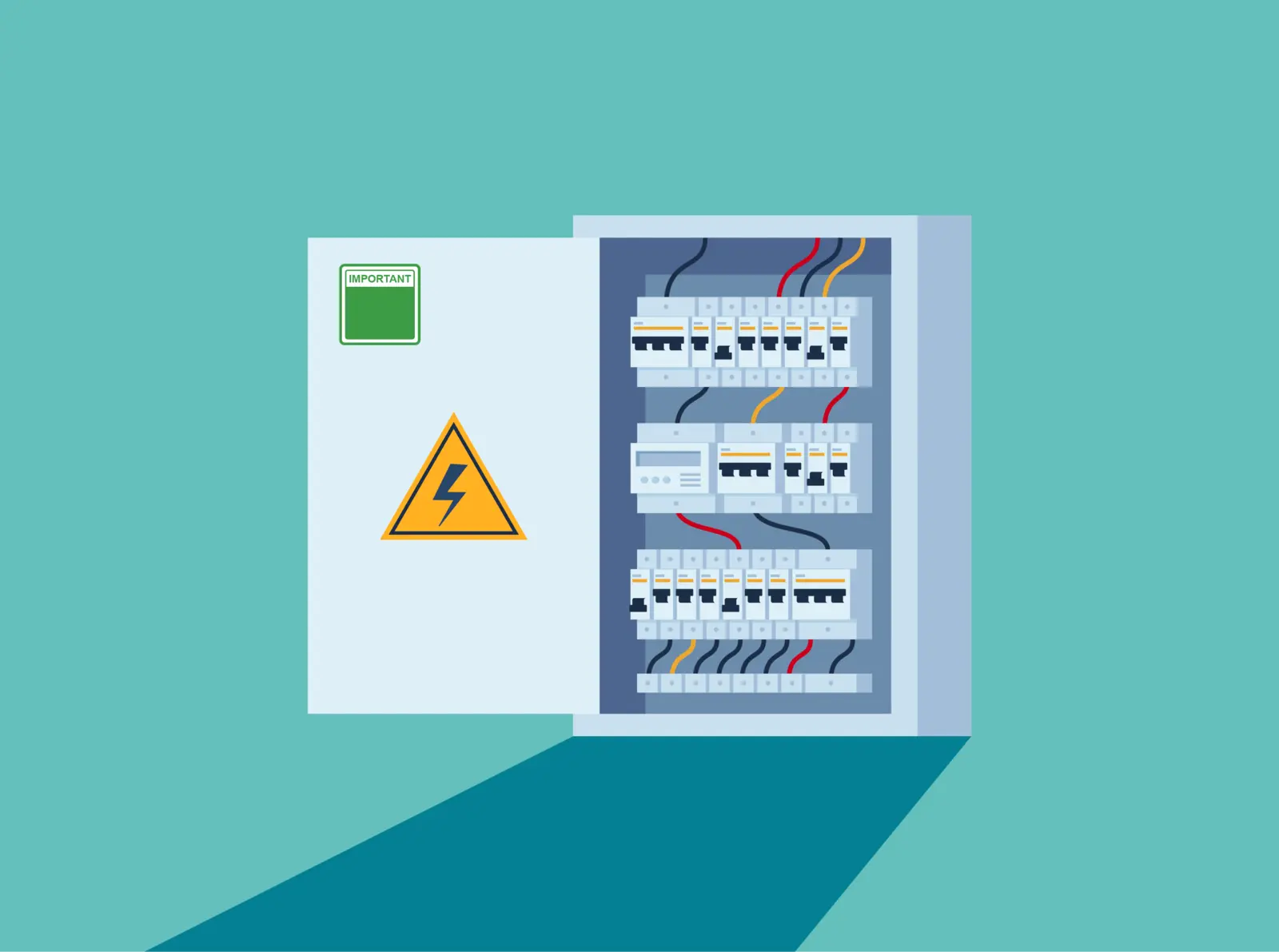
The EICR checks your building's communal electrics: lights in the hallway and stairs, the distribution board, supply to the lift and fire alarm, door entry, external lighting. It does not cover individual flats. It does not involve building works. An accredited inspector spends a few hours on site and produces a written report with a pass, a fail, or a list of codes.

Typical cost

£250 to £1,200

Depends on block size, communal scope, and whether there's a lift. Small blocks under £400. Blocks with lifts or over 30 units typically £800 to £2,000. See calculator below.

Time on site

Half to full day

Visual inspection plus dead and live testing of a sample of circuits. No flats entered. Residents are not disturbed except for a brief power interruption while the DB is tested.

Review frequency

Every 5 years

The standard interval for residential common parts under BS 7671. Your previous EICR may specify an earlier date based on condition. Renew before the certificate expires, not after.

The report follows the EICR format prescribed by BS 7671:2018+A2:2022 (the 18th Edition Wiring Regulations). Any issues found are graded: C1 (danger present, immediate action), C2 (potentially dangerous, urgent remedial action), C3 (improvement recommended, not urgent), FI (further investigation required). A satisfactory EICR has no open C1 or C2 codes. If yours has them, you have not passed until they are remedied and reinspected.

Your situation

Three versions of this gap.

Pick the one that matches you. Each has a different fix and a different timeline.

1. I cannot find the EICR

1 to 3 weeks

Most likely: one exists and is filed with the managing agent, but has not been shared with current directors. Quick to resolve.

What to do. Ask your managing agent or freeholder for the current EICR, the contractor's accreditation details, and the date it was carried out. Give them 14 days. If they cannot produce it, assume State 2 and commission a new one.

2. There is no EICR, or the last one is over 5 years old

2 to 5 weeks

The inspection cycle has lapsed. Your duty is active and ongoing. Insurer notification may be required.

What to do. Commission a new EICR using the price calculator below, the supplier checklist to pick an accredited contractor, and the draft email to get three quotes. Expect 1 to 2 weeks to receive quotes, 1 to 3 weeks from instruction to written report.

3. We have an EICR but it has open C1 or C2 codes

Remedy urgently

The report is not a pass until C1 and C2 codes are fixed and reinspected. Ignoring these exposes directors personally and voids fire insurance cover.

What to do.
  • Commission the remedial works from an accredited contractor (can be the same or different from the inspector).
  • Book a reinspection to issue an updated satisfactory EICR. Do not close the file until you have a clean certificate.
  • C1 codes should be made safe the same day (an inspector will usually do this on site before leaving). C2 codes typically need remedy within 28 days.
  • Notify your buildings insurer that remediation is under way. Keep correspondence on file.
Price

What a fair EICR quote looks like for your building.

Enter your building's basics and we will estimate a realistic range. If you came from the audit, some of this is already filled in.

Pre-filled from your recent audit. Adjust anything that is not right.
Flats or residential units only.
Covers what the inspector needs to test.
Lift control wiring is tested separately from lift maintenance.
Older installations take longer to inspect and more often trigger C2 findings.
London & SE quotes typically run 20 to 30% above regional.
Expected quote range (communal EICR)
All figures exclude VAT. Most UK property suppliers are VAT-registered and will add 20%; residential RMC/RTM companies usually cannot reclaim it, so factor it into the budget.
Where do these figures come from?
  • EICR cost ranges and 5-year cycle: NICEIC: Guide to Electrical Installation Condition Reports, 2024. View source →
  • Statutory basis (common parts): Electricity at Work Regulations 1989. View source →
  • Wiring standards referenced in EICR: BS 7671:2018+A2:2022 (IET Wiring Regulations 18th Edition). View source →

All figures are indicative ranges based on published rates checked April–May 2026. Always compare three written quotes for your specific building. Last reviewed for accuracy on the page legal-check date shown above.

£450 to £720
Around £56 to £90 per leaseholder.
Section 20 not required
Per-leaseholder cost is well below the £250 threshold. Instruct directly and recover through your normal service charge.
See the Section 20 process →
Ranges are indicative only, based on published rates from NICEIC and NAPIT-registered contractors as of April 2026. Always compare three written quotes. C1 or C2 remediation is usually quoted separately once the report is issued; budget an additional 30 to 100% of the inspection cost as a contingency for remedial work on an older installation.
Suppliers

How to pick an inspector without knowing anything about electrical safety.

You do not need to understand BS 7671 to instruct a good inspection. You need to know which accreditations to insist on, and which six questions to ask before you book.

Find a registered electrical contractor for your communal EICR: Get three written quotes for any commissioned work. Verify accreditation numbers before instructing.

Accreditations to insist on

  • NICEIC (National Inspection Council for Electrical Installation Contracting). NICEIC directory.
  • NAPIT (National Association of Professional Inspectors and Testers). NAPIT directory.
  • ECA (Electrical Contractors' Association). ECA directory.
  • Stroma Certification for Part P and EICR. Stroma member search.
  • If the contractor has none of these, walk away. Electrical inspection is a competence-registered trade.

What a good quote includes

  • Periodic inspection in line with BS 7671:2018+A2:2022 (the 18th Edition, with the second amendment).
  • Visual inspection, dead testing, and sampled live testing of circuits.
  • A full EICR report with all findings coded C1, C2, C3, or FI.
  • A named inspector, their registration number, and their professional indemnity cover.
  • Clear turnaround from site visit to written report.
  • Separate line item or statement on how C1/C2 remediation would be priced and scheduled.

Six questions to ask before you instruct

  1. Are you NICEIC, NAPIT, ECA, or Stroma registered for periodic inspection? If no, walk away.
  2. How many blocks of this size and scope have you inspected in the last 12 months?
  3. Will the report follow BS 7671:2018+A2:2022 (the 18th Edition with the second amendment)?
  4. What percentage sampling of circuits will you perform? Less than 20% on a residential block is a red flag unless the building is very new.
  5. If C1 or C2 codes are found, how quickly can remediation be scheduled? Can you provide the remedial quote before leaving site?
  6. How soon after the visit will we receive the signed written report? More than 2 weeks without a reason is slow.
Draft email

Copy this. Fill the amber slots. Send it to three inspectors.

Written to meet the quality checklist above. It asks for exactly what a proper EICR quote should contain. If a contractor pushes back, you have your answer about their fit.

Funding and recovery

How this gets paid for. And when Section 20 kicks in.

The EICR is a legitimate service charge expense. Smaller blocks stay below the Section 20 threshold; medium and larger blocks, especially those with lifts, often cross it. Check before you instruct.

Route 1: Within the normal annual service charge

Include the EICR in your annual service charge budget and recover through the usual quarterly or half-yearly demands. Attach the invoice to the year-end accounts. No Section 20 consultation required if per-leaseholder cost is under £250.

Route 2: One-off safety compliance levy

If the reserve fund is empty and you need to commission urgently, issue a one-off demand specifically for the EICR and any remediation quoted. The demand must include the Section 21B summary of rights and obligations, or it is not legally enforceable. Leaseholders generally accept safety-led demands without pushback when the reason is statutory.

When Section 20 does apply

Section 20 consultation is required when the cost to any single leaseholder exceeds £250. For mid-size and larger blocks with lifts or complex communal scope, the EICR plus remediation can easily push each leaseholder over this threshold. If it does, you must run the long consultation (two notices, 30 days each) before instructing. Miss it, and you can only recover £250 per leaseholder. See the Section 20 process for the full flow and the draft notices.

Record it properly

Keep the signed EICR, the contractor's registration details, the invoices for inspection and any remediation, and the reinspection certificate if C1/C2 codes were remedied. Notify your buildings insurer when you have a new clean certificate. Set a calendar reminder for the next inspection date.

Common questions

Six things directors and leaseholders ask about EICRs.

These answers are extracted so search engines and AI assistants can cite them directly. If your question is not here, the answer is most likely in the sections above.

How much does an EICR cost for a block of flats?
For residential common parts, an EICR typically costs £250 to £800 for small to mid-size blocks (under 20 units with basic communal electrical scope). Blocks with lifts, complex communal installations, or over 30 units commonly run £800 to £2,000. London and the South East run 20 to 30 percent above regional prices. Remedial work on C1 or C2 findings is quoted separately once the report is issued.
How often is an EICR required for a leasehold block?
The landlord-controlled common parts installation should have a periodic inspection at least every five years, or sooner if specified by the last inspector. BS 7671:2018+A2:2022 sets the interval based on the installation's condition and use. Some buildings in heavy-use or marine environments are inspected more frequently.
Who is responsible for the EICR in a block of flats?
The duty holder under the Electricity at Work Regulations 1989 is usually the freeholder, RTM company, or RMC that controls the communal electrical installations. Individual leaseholders are responsible for their own flat's installation (behind the meter) unless the lease says otherwise. Directors of an RMC or RTM carry personal criminal liability for breach.
What happens if there is no EICR or it has expired?
Failure to maintain electrical installations in a safe condition is a criminal offence under the Electricity at Work Regulations 1989. In addition, buildings insurers routinely refuse to cover fire damage claims caused by an electrical fault if no current EICR is on file, or if outstanding C1 or C2 codes have not been remedied. Uninsured fire damage in a block of flats is an extinction-level event for the company and its directors.
What do C1, C2, C3, and FI codes mean on an EICR?
C1 means danger present and risk of injury; immediate action required. C2 means potentially dangerous; urgent remedial action required. C3 means improvement recommended but not urgent. FI means further investigation required. A satisfactory EICR has no C1 or C2 codes open. If yours shows any, the building has not passed until they are remedied and reinspected.
Do leaseholders have to let the inspector into their flat?
For the communal EICR, no. The inspection covers landlord-controlled installations only (communal lighting, distribution boards, lift wiring, fire alarm supply, door entry). Individual flats are inspected under a separate EICR typically commissioned by the leaseholder, or required by mortgage lenders or the flat's own tenancy agreement if let.
A
Real director, real building

"Building Trust is built by Adam Street, a director of Hafer Road Flats Limited (16-flat SoF in Battersea). Every page reflects what we do at HRFL or wish we had been told sooner. The fee benchmarks calibrate against real building data."

Read the Hafer Road case study →

This page, but for every compliance certificate you carry.

BLOCK-iQ tracks every certificate with an expiry date, flags renewal 90 days out, and pre-populates the quote-request email with your building's data. No more discovering an EICR expired two years ago when a leaseholder asks for it at sale.

Stay informed

Compliance obligations are changing fast. The Building Trust newsletter explains what directors actually need to do, once a month. No spam.

Next steps

Four ways to take this further.

Free to read on. Free to test against your lease. Free to ask the bot. Or paid, if you want us to write the letter for you.